Skip to content
Electrical TopicPractical guides. Stronger skills.Learn in Hindi

Transformer Practical Interview Questions – Protection and Safety

16 Transformer Interview Q&A – Practical Part 6

Revise transformer protection, alarms and safe checks with 16 short answers and two mock tests.

76

Q76. Why does a transformer need protection?

Answer: A transformer needs protection to detect electrical faults and unsafe operating conditions and isolate equipment when required. Schemes may include differential 87T, restricted earth fault, overcurrent and temperature or gas devices, depending on the installation design. Verify the approved protection settings and functional trip paths before allowing the transformer to enter service.

Read detailed article

77

Q77. What is differential protection?

Answer: Transformer differential protection compares appropriately matched currents entering and leaving the protected zone to detect internal faults. Function 87T compensates for transformer ratio and vector group and normally uses restraint or blocking features suited to the relay. Check CT polarity, wiring and relay settings against the approved design before interpreting an unexpected differential operation.

Read detailed article
78

Q78. What is a Buchholz relay?

Answer: A Buchholz relay detects gas accumulation or oil surge in the pipe between the main tank and conservator of a suitable transformer. Slow gas accumulation generally operates the alarm element, while a strong oil surge normally operates the trip element, subject to design. Save the indication and arrange authorised investigation before resetting it.

Read detailed article
79

Q79. What can a Buchholz alarm indicate?

Answer: A Buchholz alarm can indicate accumulated gas from an internal fault or air introduced during recent oil work. The gas collection and DGA results should be assessed with transformer history and IEC 60599 guidance as applicable. Notify the authorised operator and have the cause investigated before clearing the alarm or approving continued operation.

Read detailed article
80

Q80. What is a pressure relief device?

Answer: A pressure relief device opens at a specified tank pressure to relieve excessive internal pressure and limit mechanical damage. Its pressure setting is manufacturer-specific, and an auxiliary contact may provide an alarm or trip indication depending on the scheme. Treat operation as a serious event and have authorised staff investigate before reinstating the transformer.

Read detailed article
81

Q81. What is overcurrent protection?

Answer: Overcurrent protection operates when measured current exceeds a set threshold for the selected time or instantaneous characteristic. ANSI functions 50 and 51 commonly identify instantaneous and time overcurrent, with pickup and delay coordinated to downstream protection. Review the relay event and the approved settings before deciding whether the cause was overload or a fault.

Read detailed article
82

Q82. What is earth-fault protection?

Answer: Earth-fault protection detects unwanted current flowing to earth using a residual or neutral measurement arrangement. Common relay functions include 50N and 51N for earth-fault current pickup, with sensitivity limited by system earthing and CT arrangement. Check the recorded fault current and the approved relay scheme before deciding where the fault was located.

Read detailed article
83

Q83. What is restricted earth-fault protection?

Answer: Restricted earth-fault protection detects earth faults inside a defined winding zone by comparing phase CT residual current with neutral CT current. It is often labelled REF or 64REF, with the exact designation depending on the relay and drawing. Verify CT ratios, polarity and zone boundaries before accepting settings or interpreting a trip event.

Read detailed article
84

Q84. What is the purpose of OTI and WTI trips?

Answer: OTI and WTI trips protect against excessive oil temperature or indicated winding temperature when their approved thresholds are reached. The trip settings in degrees Celsius are equipment-specific and coordinated with fan stages and alarms ahead of tripping. Investigate load and cooling performance and verify the instrument reading before accepting a return to normal service.

Read detailed article
85

Q85. Why test protection relays regularly?

Answer: Regular relay testing verifies that protection operates at the approved settings and that its output reaches the intended trip or alarm circuit. Secondary injection can check pickup and time, while an authorised functional test verifies the relevant output path. Record actual values and restoration checks so any temporary test isolation is removed before handover.

Read detailed article
86

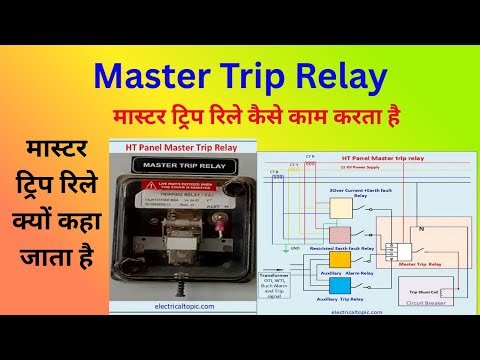
Q86. What is a master trip relay?

Answer: A master trip relay receives selected protection commands and operates the necessary breaker trip circuits and indications. An ANSI 86 lockout is often used where the scheme must prevent reclosure until authorised reset, but designs vary. Check the cause-and-effect matrix to identify which breakers and interlocks should operate for each initiating fault.

Read detailed article
87

Q87. What should we do after a transformer protection trip?

Answer: After a protection trip, preserve the event records and keep the transformer out of service until the authorised investigation determines the cause. Review relay elements such as 87T or REF alongside fault currents, mechanical indications and alarm history. Re-energize only after required inspections, tests and formal approval are completed under the site procedure.

Read detailed article
88

Q88. Why is a fire protection system used near transformers?

Answer: Transformer fire protection limits fire spread and helps protect people, adjacent equipment and buildings during a serious event. The approved installation may use detection, oil containment, separation and water spray or another engineered suppression system as required. Check system readiness and investigate impairments under the site procedure rather than relying on transformer electrical protection alone.

Read detailed article
89

Q89. What is safe isolation before transformer work?

Answer: Safe isolation establishes and verifies a safe work boundary before people touch transformer equipment. The approved switching plan covers possible HV and LV backfeed, auxiliary sources, lockout, absence-of-voltage verification and required protective earthing. Have authorised staff identify the exact transformer and stop if any source, isolation point or safe state cannot be verified.

Read detailed article
90

Q90. Why must we keep clear of an energized transformer?

Answer: Keep clear of an energized transformer because exposed voltage, arc flash and sudden equipment failure can injure people even without direct contact. An 11 kV rating does not by itself establish a universal safe clearance, which depends on site rules and the assessed hazard. Stay outside marked boundaries and use approved remote observations.

Read detailed article
91

Q91. What is a transformer safety interlock?

Answer: A transformer safety interlock prevents an unsafe operation, such as closing an incoming breaker with an earth switch in an incompatible position. The approved scheme may use mechanical, electrical or trapped-key interlocks that enforce defined equipment states. Verify permitted and blocked operations through the authorised test schedule without bypassing any device or permissive.

Read detailed article

Test Your Knowledge Through Mock Test

Practical Part 6 · Two tests, 10 questions each. Choose a test below to begin.

Question 1 of 100 / 10 answered

Your answers stay on this page.

KEEP LEARNING WITH ELECTRICAL TOPIC

Learn Faster. Improve Your Electrical Skills.

WEBSITE • EMAIL UPDATES

New guides. Straight to your inbox.

Subscribe free. Get fresh website updates.

Have a question? Email info@electricaltopic.com

Videos in Hindi

Electrical Topic on YouTube

Watch practical electrical lessons from our YouTube channel.

Visit channel