Skip to content
Electrical TopicPractical guides. Stronger skills.Learn in Hindi

Transformer Practical Interview Questions – Oil Testing and Treatment

15 Transformer Interview Q&A – Practical Part 2

Review transformer oil sampling, BDV testing and oil condition in short answers. Then try two mock tests.

16

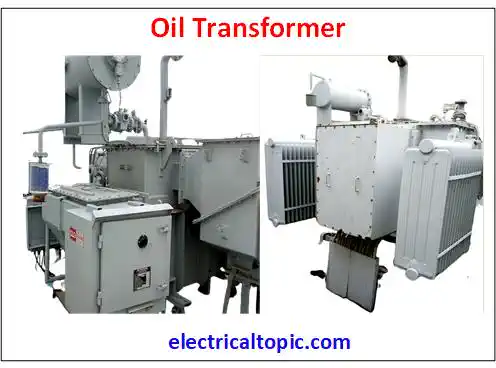
Q16. Why should transformer oil be checked during maintenance?

Answer: Transformer oil testing checks its insulating condition, contamination and changes that may indicate overheating or other developing faults. IEC 60422 guides mineral-oil supervision, while IEC 60599 supports interpretation of dissolved gases in applicable equipment. Compare the oil condition and gas trends with load, service history and the maker’s instructions before choosing further tests or treatment.

Read detailed article

17

Q17. What is an oil BDV test?

Answer: An oil BDV (Breakdown Voltage) test measures the dielectric strength of transformer oil per IEC 60156 / IS 6792 using standard electrodes spaced 2.5 mm apart with voltage ramped at 2 kV/s. Six consecutive breakdown readings are averaged; healthy new oil typically exceeds 60–70 kV, while in-service distribution transformer oil should generally remain above 30–40 kV.

Read detailed article
18

Q18. Is one BDV number enough to approve transformer oil?

Answer: No—first, a valid BDV result itself is the average of 6 consecutive tests (with a 1–2 minute rest between shots) to eliminate stray-particle spikes. Second, even with acceptable BDV, full oil health assessment per IEC 60422 requires checking moisture (ppm), acidity, interfacial tension (IFT), tan delta, and DGA.

Read detailed article
19

Q19. Why must an oil sample be taken carefully?

Answer: Improper sampling introduces dust, air bubbles, or atmospheric moisture that gives false low BDV or inaccurate DGA results. Per IEC 60475, flush the bottom drain valve thoroughly first, collect oil slowly into a clean dry amber glass bottle (or gas-tight syringe for DGA) without splashing, avoid sampling in rain or high humidity, and label the compartment and oil temperature.

Read detailed article
20

Q20. What is moisture in transformer oil?

Answer: Moisture is dissolved or free water in transformer oil that lowers dielectric strength and accelerates cellulose (paper) insulation aging. Measured in ppm (mg/kg) by Karl Fischer titration (IEC 60814), in-service distribution transformer oil is typically kept below 15–20 ppm; readings above 30–35 ppm (or a positive site crackle test) indicate urgent need for vacuum dehydration.

Read detailed article
21

Q21. What does DGA mean?

Answer: DGA (Dissolved Gas Analysis) measures fault gases dissolved in transformer oil to detect incipient internal faults before failure. Per IEC 60599, key indicator gases include Hydrogen (H2) for partial discharge/corona, Methane (CH4) and Ethane (C2H6) for low-temperature overheating, Ethylene (C2H4) for severe thermal faults, Acetylene (C2H2) for high-energy arcing, and CO/CO2 for paper insulation degradation.

Read detailed article
22

Q22. Can a DGA result alone confirm a fault?

Answer: A single dissolved gas result can indicate a possible fault but should be interpreted with other evidence. IEC 60599 uses gas concentrations, patterns and rates, while threshold interpretation depends on equipment history and normal background. Check sample quality, compare previous reports and review protection operations before deciding whether urgent investigation or repeat testing is needed.

Read detailed article
23

Q23. What is oil filtration?

Answer: Oil filtration removes suspended particles from transformer oil using suitable treatment equipment. Particle removal may improve BDV measured in kV, but removing dissolved water or gases usually needs an appropriate dehydration or degassing process. Check contamination type in the laboratory report before choosing a treatment and compare results taken before and after the approved work.

Read detailed article
24

Q24. What is oil dehydration?

Answer: Oil dehydration removes dissolved moisture, gases, and fine sludge by circulating the oil through a high-vacuum filtration/dehydration plant, heating it to around 60–65°C under vacuum so water vaporizes and is extracted without degrading the oil. Because moisture trapped in paper insulation can migrate back into dry oil, retest moisture (ppm) and BDV after a settling period.

Read detailed article
25

Q25. When might oil treatment be required?

Answer: Oil filtration/dehydration is typically required when BDV falls below 30–40 kV, moisture exceeds 30 ppm, visible suspended particles or cloudiness appear, or after opening the tank for internal maintenance/repairs. If acidity or sludge is severely high, oil reclamation or full oil replacement is needed instead of simple dehydration.

Read detailed article
26

Q26. Why check oil acidity?

Answer: Oil acidity (neutralisation number, measured in mg KOH/g) tracks chemical oxidation and aging of mineral oil. Rising acidity causes corrosive attack on windings/tank and leads to sludge deposits that block cooling ducts. For in-service transformers, acidity below 0.2–0.3 mg KOH/g is generally acceptable, while values above 0.5 mg KOH/g require oil reclamation or replacement.

Read detailed article
27

Q27. What is an oil leak test?

Answer: An oil leak test checks tank seals, joints, valves and fittings for leakage using a method permitted for that transformer. IEC 60076 and manufacturer documentation may specify particular tightness tests, and pressure limits differ for sealed and conservator designs. Record the suspected location and have repairs and follow-up verification done within the approved work plan.

Read detailed article
28

Q28. Why check the conservator oil level?

Answer: Conservator oil level shows whether the expansion system is operating within the expected range for the current oil temperature. The magnetic oil gauge, or MOG where fitted, should be read against its model-specific scale and alarm conditions. If the reading is low or unusually high, compare it with temperature and check for recent work or leakage.

Read detailed article
29

Q29. What is the purpose of an oil sampling record?

Answer: An oil sampling record links a laboratory result to the right transformer, compartment, sample point and service condition. Record the asset number, sampling time, oil temperature in degrees Celsius and container identification using the approved IEC 60475 sampling procedure. Keep OLTC and main-tank samples clearly separate where the compartments have different oil systems.

Read detailed article
30

Q30. Why should treated oil be retested?

Answer: Retest treated oil to see whether the specified treatment improved the condition and achieved the agreed acceptance criteria. Repeat applicable checks such as BDV in kV, water in ppm and acidity in mg KOH/g using comparable methods. Compare with the pre-treatment record and arrange follow-up samples if moisture returns or fault gas generation continues.

Read detailed article

Test Your Knowledge Through Mock Test

Practical Part 2 · Two tests, 10 questions each. Choose a test below to begin.

Question 1 of 100 / 10 answered

Your answers stay on this page.

KEEP LEARNING WITH ELECTRICAL TOPIC

Learn Faster. Improve Your Electrical Skills.

WEBSITE • EMAIL UPDATES

New guides. Straight to your inbox.

Subscribe free. Get fresh website updates.

Have a question? Email info@electricaltopic.com

Videos in Hindi

Electrical Topic on YouTube

Watch practical electrical lessons from our YouTube channel.

Visit channel