LT Panel Logbook
Template and Types of parameters.
1- LT panel logbooks:
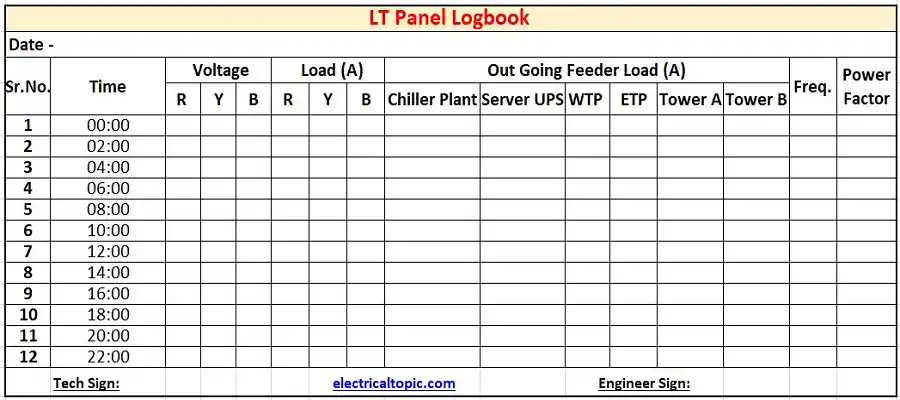
LT panel logbook is a parameters note book where the required parameters are noted down in manually. The all parameters data is noted down in a frequency base according requirement as a hourly, 2 hourly, 4 hourly or per day.
Use consecutive LT panel readings to identify changes in incomer loading, voltage balance, feeder loading or alarms. Compare readings for the same panel under similar operating conditions.
2- LT panel logbook Template :
3- Types of logbook parameters. :
Different types parameters are noted down in logbooks in technical system as per requirement. which are listed below.
- Date and time.
- All phase incomer voltage.
- All phase current.
- Frequency.
- Power factor.
- All feeders current.
1- Date and Time:
Date and time is the most important in log book. If we want to know about exact parameters from last week then we can easily find out.
2-All phase incomer voltage.
Record the three line-to-line voltages and, where the panel has a neutral and the meter provides them, the line-to-neutral readings. Compare readings with the panel’s nominal voltage and site limits.
3- All phase current.
Record the L1, L2 and L3 currents from the LT incomer meter. Compare phases under the same load condition and note any sustained imbalance. Record neutral current when it is available and relevant to the panel.
4- Frequency.
Record the measured supply frequency in Hz and identify the active source, such as utility or generator. Flag readings outside the limits specified by the site.
5- Power factor.
Record the incomer’s power factor and its leading or lagging indication when available. Power factor is kW ÷ kVA. An indicated value of 0.85 does not imply a 15% energy loss.
6- Outgoing feeder currents
Record the feeder ID, load served and current per phase. Compare against the approved feeder loading limit and the feeder’s normal trend. Note any breaker trip or abnormal change.