Circuit Breaker PPM Checklist
Circuit Breaker Maintenance Checklist
Use this planned preventive maintenance (PPM) checklist to record circuit breaker condition, approved maintenance tasks and the evidence needed to return equipment to service. Allow for differences between air circuit breakers (ACBs), vacuum circuit breakers (VCBs) and sealed molded-case circuit breakers.
Circuit Breaker PPM Checklist Format
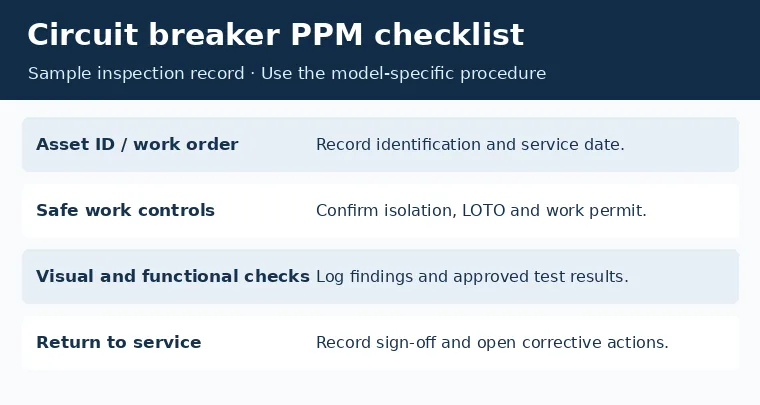
Record the breaker ID, location, type, rating, serial number, operation counter and work order. Include the permit reference, approved procedure, test equipment and calibration status. Use the sample above as a record format and attach the model-specific test limits and actual readings.
Maintenance Intervals
Set the frequency from the manufacturer’s instructions, service conditions, switching duty and fault history. An example site plan may include monthly external checks, quarterly review of alarms and operation counts, six-monthly inspections, and scheduled annual functional tests where applicable. Inspect after a significant fault or abnormal operation as directed by the site procedure.
Safety Before Breaker Maintenance
Qualified personnel must follow the approved switching, isolation and lockout/tagout procedure. Identify all energy sources, verify absence of voltage, and secure stored energy, including charging springs, as specified. For a draw-out breaker, follow the manufacturer’s racking procedure and use the site-required PPE and tools. Restore equipment only after the work is signed off and the authorized site procedure is complete.
Circuit Breaker Maintenance Checkpoints
Inspection and functional checks
- Inspect the enclosure, terminals, earthing, shutters and interlocks as applicable.
- For serviceable ACBs, inspect accessible fixed and moving contacts and the arc chute for erosion, contamination or cracking. Use only manufacturer-approved cleaning methods. Keep sealed interrupters intact.
- Check the operating mechanism, spring charging, position indication and applicable shunt-trip or undervoltage release functions using the approved test configuration.
- Compare protection settings with the approved records. Record any differences and escalate them through the site’s change procedure.
Record and close out the work
Log measured values, approved acceptance limits, corrective actions and remaining defects. Confirm the condition of guards and covers, document test results and obtain the required release before normal operation resumes.